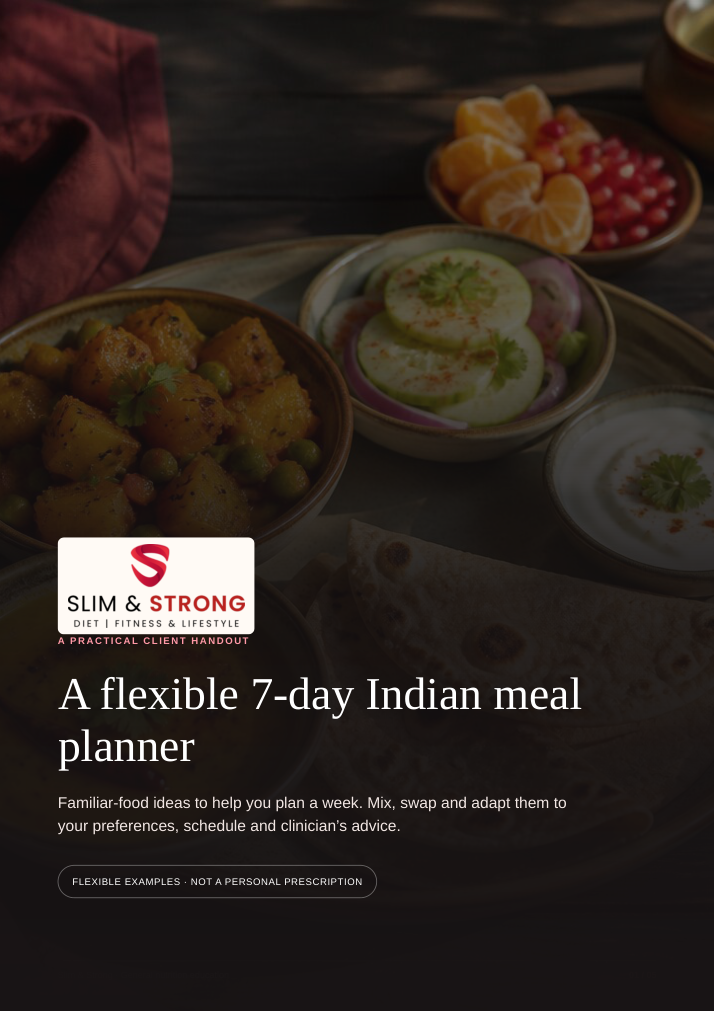
Flexible 7-Day Indian Meal Planner
Mix-and-match ideas built around familiar foods, with shopping prompts and a page for your own notes.
Download the meal planner
Personalised nutrition guidance Slim & Strong
Nutrition planning for people living abroad, long-haul drivers and shift workers — portable meals, grocery strategies and routine-based eating built around your real schedule.
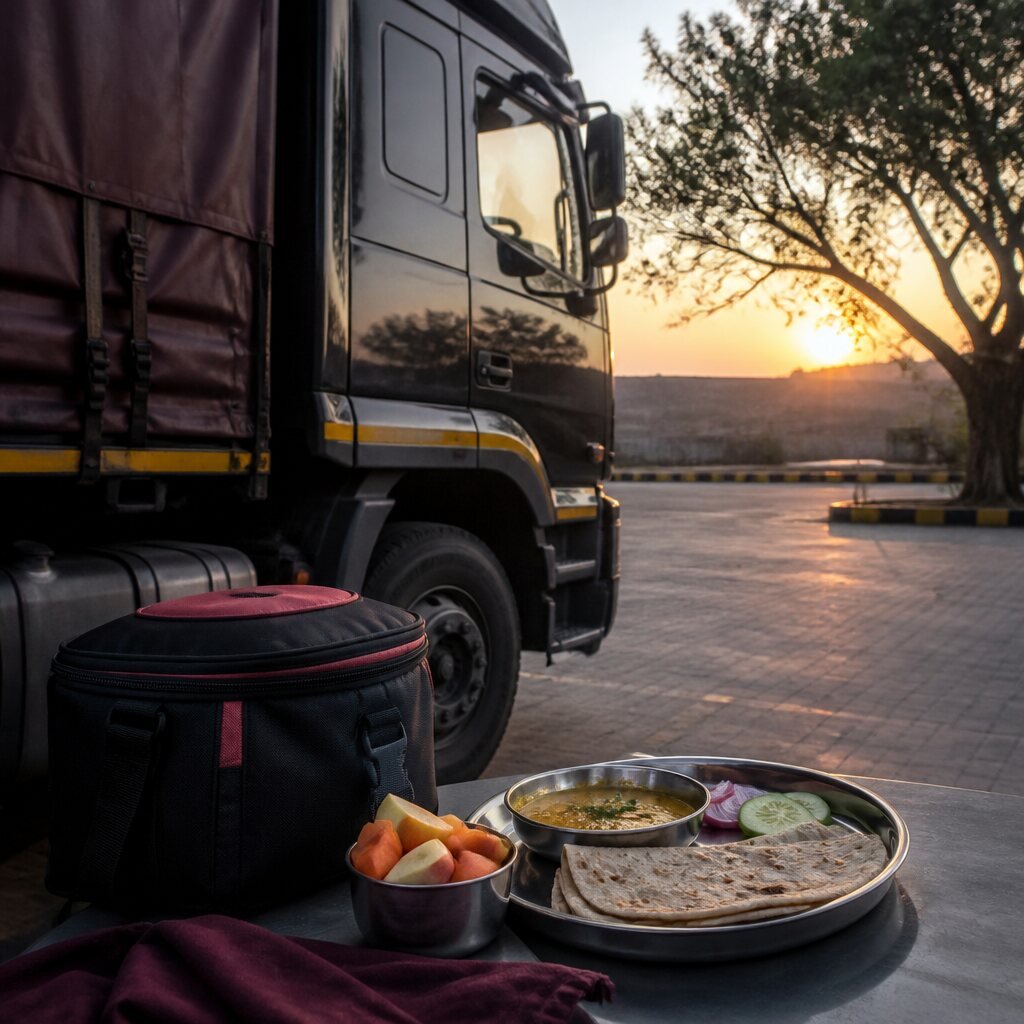
If you live abroad, drive long hauls or work rotating shifts, you already know the central problem with most diet advice: it assumes a kitchen, a schedule and a supermarket you recognize. This plan category is built for the opposite reality — meals that travel, groceries in unfamiliar stores, eating windows that move, and a body that never quite knows what time it is.
The guidance here is practical planning and education, shaped with you during your enquiry. It is not a clinical service delivered in every country, and it never involves eating or phone use while driving.
Everything starts with your actual pattern. A long-haul driver might park at a highway dhaba or a North American truck stop; an NRI professional on rotating shifts might cook once every three days; a night-shift worker might eat dinner at 8 a.m. Each pattern has workable strategies — but they differ, which is why the enquiry asks about your routine first. Your time zone is requested so contact windows don't land at 3 a.m. — a preference, not a booked slot.
Supermarkets abroad stock everything except the things your hands know how to cook — yet most familiar Indian ingredients have close equivalents. Lentils sit beside beans in nearly every store; frozen mixed vegetables work when fresh greens are impractical; oats, brown rice and whole-wheat flour are universal; yogurt, paneer (or firm tofu), eggs and canned chickpeas travel across cuisines.
The skill is mapping familiar meals onto what is reliably available — what freezes well, what keeps in a cabin or a small apartment fridge. These mappings are discussed as general planning ideas and refined around what you actually find.
The best travel foods share three traits: they hold at room temperature for hours, they don't leak, and they still taste good cold. Familiar options fit this better than most expect:
None of this is a prescribed menu — it is the vocabulary from which your plan is built. Vegetarian preferences, spice tolerance and dislikes are first-class inputs, not obstacles.
A meal plan that ignores storage is a food-poisoning plan. Keep perishables cool (insulated bag plus ice pack), reheat leftovers properly, discard anything warm too long, and choose hot, fresh, busy stalls over quiet ones with sitting food. In a small apartment with one fridge shelf, the discussion shifts to dry staples, frozen portions and weekly batch cooking.
Eating out is unavoidable on the road and common abroad. The skill is ordering adjustments, not abstinence: grilled or tandoori over fried, dal-sabzi with roti over creamy curry with naan, water or chaas over sweetened drinks. None of these are framed as failure when they don't happen — a plan that bends survives; a plan that shatters after one truck-stop meal doesn't.
Hydration matters on long drives, but generic drink-more advice ignores your route, cabin temperature and medical situation. General guidance: drink to thirst, keep water reachable (never while moving), favour water over sweetened drinks. Very high plain-water intake can be inappropriate with certain heart or kidney conditions — individual fluid restrictions never come from generic copy; that conversation belongs with your own clinician.
Shift work scrambles the hormones regulating hunger and fullness. Practical patterns: anchor meals at consistent eating times relative to your wake-sleep cycle, protein-forward meals during waking hours, caffeine earlier in the wake period, and treating post-shift breakfast as a real meal. These are general patterns refined with you — not a sleep prescription.
Nothing formal needed. Useful: your time zone, typical week pattern, where you buy food or stop on routes, cooking capacity, foods you rely on, and anything you want kept (vegetarian, halal, Jain, spice level). Health fields are optional and encrypted — 'None' and 'Prefer not to say' are both good answers.
When ready: send the NRI & truck driver enquiry — service selection, contact window and time zone travel with the form.
Sustainable weight habits for busy routines: Weight Loss & Belly Fat plan. Condition-specific education: Medical Nutrition & Lifestyle Support. Free article: Building Food Habits Around a Busy Work Schedule.
A good place to start
Your schedule pattern, time zone, cooking facilities, typical stops or local food options, cultural food preferences and budget realities
Duration, pricing, frequency and personal suitability are confirmed by the team during your enquiry — they are not stated on this website because they have not been verified for publication.
Ask your questions before you decideFree client resources
Practical guides to take with you
Flexible examples and printable worksheets—not personal prescriptions. Adapt them with a qualified professional when you need individual advice.
View sample meal plans and downloads
Mix-and-match ideas built around familiar foods, with shopping prompts and a page for your own notes.
Download the meal planner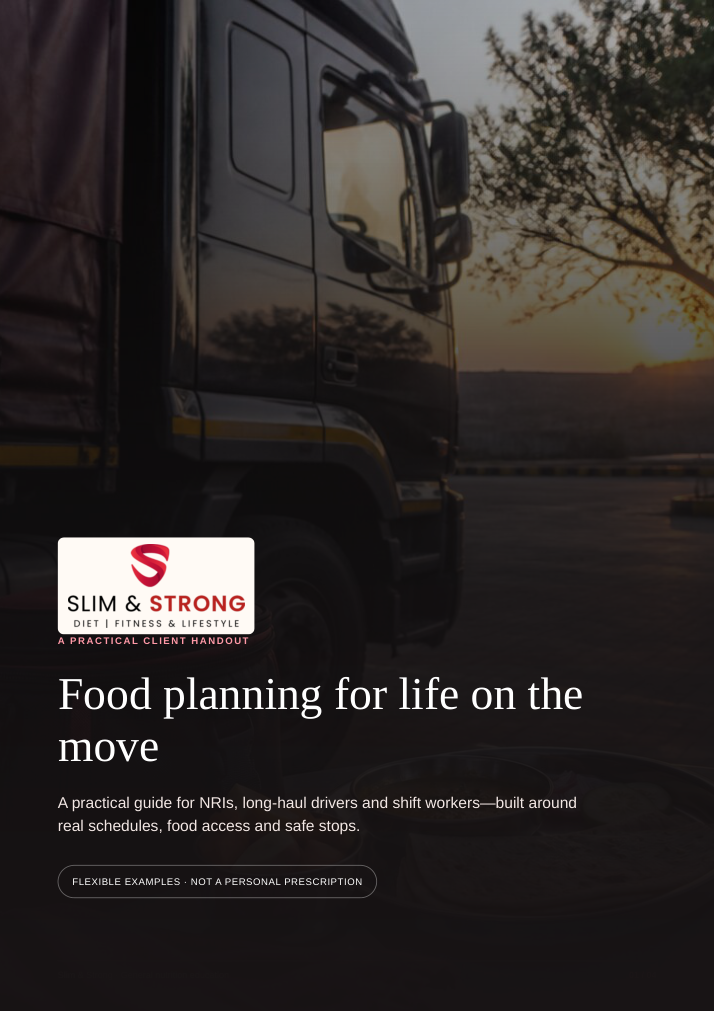
Portable meal ideas, safe-stop reminders and planning prompts for NRI, shift-work and long-haul routines.
Download the routine guideGeneral nutrition education only. These guides are not individualized diet plans or medical advice.
Your next step
Personalization starts with a conversation — not a generic chart.
Get Your Custom Diet Plan