
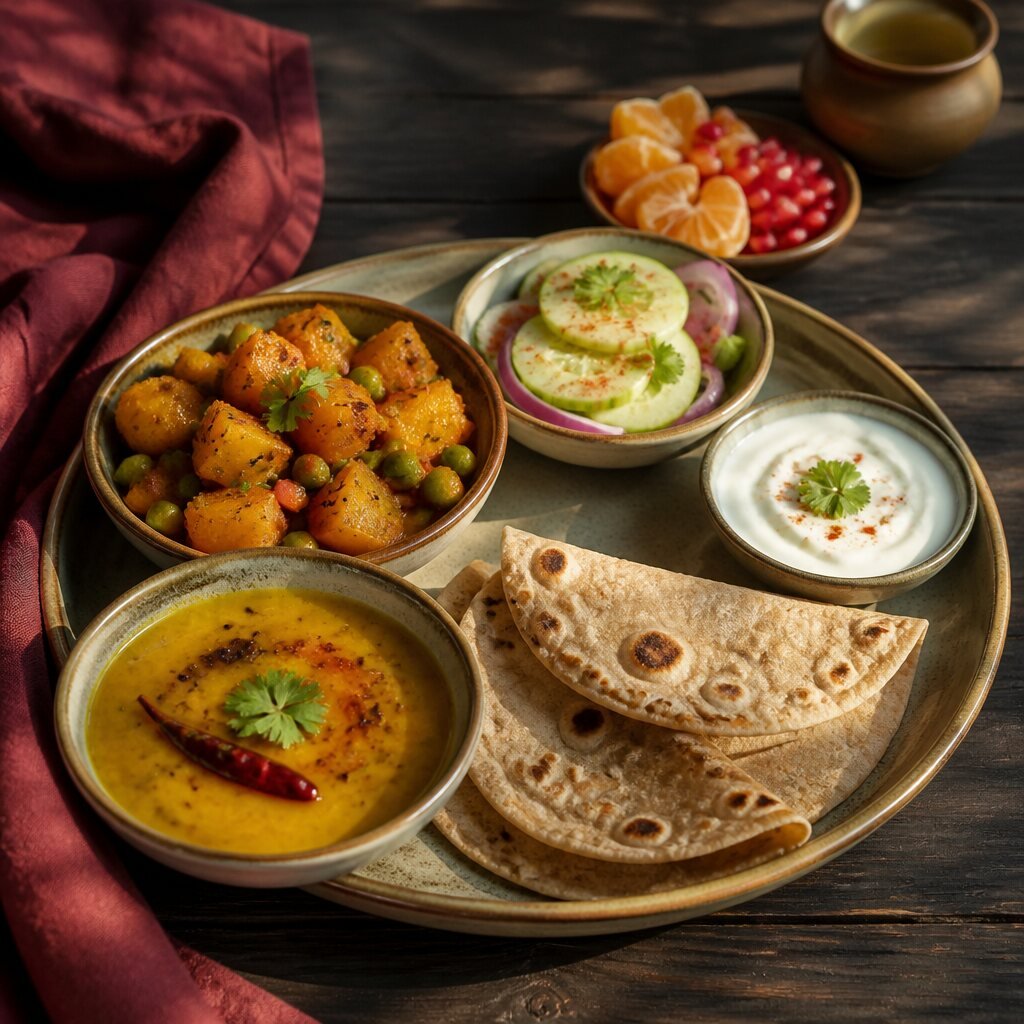
Many people already have nutritious, familiar foods in their kitchen. A balanced meal does not require imported ingredients or a complicated recipe. The useful first step is noticing what a usual meal contains and what might make it more satisfying for you.
Build from what is already on the table
Dal, beans, eggs, paneer or curd can contribute protein; vegetables, fruit and pulses add variety and fibre; roti or rice can provide a familiar staple. Different households and health needs call for different choices, so these examples are ideas rather than a personal prescription.
Make one change at a time
You might add a vegetable you enjoy, prepare a simple protein option in advance, or make water easier to reach. Keep foods that matter to you. Sustainable changes are easier to repeat when they fit taste, culture, budget and cooking time.
Be cautious with medical advice online
Some diagnoses and medicines change what is appropriate. Do not follow a general article to restrict a food group, change a medication or set an individual target. Discuss those choices with your treating clinician.
This is general nutrition education, not a personalized diet chart or a promise of a health outcome.